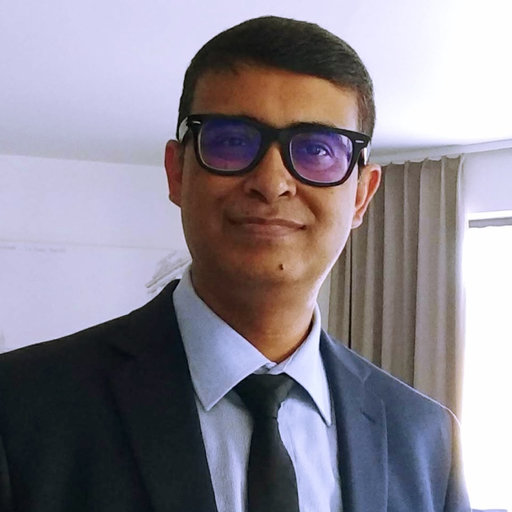
Dr. Prabal Talukdar
CEA Chair and Professor (HAG)
Department of Mechanical Engineering of IIT Delhi
Dr. Prabal Talukdar is currently working as a CEA Chair and Professor (HAG) in the Department of Mechanical Engineering of IIT Delhi. He did his MTech and PhD from IIT Guwahati and Bachelor of Engineering from Assam Engineering College. Prof. Talukdar worked as a Post-Doctoral fellow at the University of Saskatchewan (2005-2006), Canada and University of Erlangen-Nuremberg (2002-2005), Germany. He has authored about 115 papers in international journals and 80 papers in International Conferences and filed four patents. Sixteen students successfully defended their PhD thesis under his supervision and currently, 3 PhD students are working under his guidance. He has carried out about 16 sponsored research project and consultancy. He is currently an Associate Editor of “Journal of Enhanced Heat Transfer”. He also served as an Associate Editor of “ASME Journal of Thermal Science and Engineering Applications” during 2019-2023. He has been placed in the list of top 2% scientists worldwide published by Stanford University in the previous 3 years. His research areas are heat and mass transfer in porous media, continuous casting, convective drying, Inverse heat transfer, heat transfer through thermal protective fabric, Bio-heat Transfer, radiative heat transfer etc.
Title: Volumetric Solar Receivers – Modelling of Heat Transfer
Abstract: Sustainable energy sources are the need of the hour in view of declining conventional sources and escalating energy demands. Solar energy stands out as one of the most promising renewable energy sources due to its abundant free availability in nature and increasing output efficiencies over other energy resources. In Concentrated Solar Power systems, the receiver plays a critical role in, responsible for converting concentrated solar radiation into thermal energy. Various types of receivers exist for capturing the heat and transferring it to the Heat Transfer Fluid (HTF). Volumetric Solar Receivers (VRS) work on the concept of volumetric solar absorption, i.e., the solar radiation is absorbed throughout the volume of the receiver rather than just on its surface. The core of the VSR consists of a porous absorber, which enables the volumetric absorption of solar radiation.
The operation of a VSR involves a complex intercoupling of various physics, including fluid flow, thermal radiation transport, heat transfer and structural mechanics. The modelling of this complex governing physics is crucial for the performance evaluation and optimization of VSRs. The primary objective of a VSR is to produce high-temperature heat transfer fluid at its outlet with minimal pressure drop. Moreover, operating at elevated temperatures leads to thermal gradients and stresses. Therefore, assessing VSR performance necessitates analyzing hydraulic, thermal, and mechanical behaviours and their variations with porous structure and design parameters. Pore scale heat transfer modelling is computationally expensive while they are useful to study the actual behaviour of the heat transfer phenomena. Computation using volume averaged modelling is relatively faster and is suitable for multiphysics problems. A brief overview focusing on the heat transfer modelling through VSR will be presented in this work.